
Beyond
Surface Treatment,
Surface Engineering.
Blasting Media Short Guide: Shapes, Materials and Standards
Blasting abrasive media are the tool a blast machine throws at the part: shot or grit, in steel, stainless or ceramic. The shape and the material decide what happens on the surface and what the process costs — this is the "fuel" of a blaster and the booster of the savings.
If you need to choose or review the tool as an end user, two things matter: the comparison between different products, and the effect on the parts you actually run. If instead you need to know whether your "fuel" consumption is reasonable, and check where the savings are, move to this article.
The technical data is on the manufacturers' websites, and for the specific media you are considering you will find it there, with more precision.
The engineering law governing the process is simple: kinetic energy. Controlling the media's speed and choosing its mass carefully is the way to succeed.
Shapes are described first, materials follow and standards are in the end.
Shots - Spherical - "S"
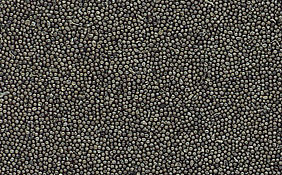
Shape is spherical, identified by an "S" followed by some numbers that identify shot's size.
Good results in soft cleaning and deburring.
Usually it is the best shape for shot peening.
Good performance in cleaning and peening processes.
Grits - Angular - "G"
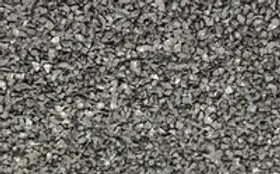
Shape is angular, identified by a "G" followed by some numbers that identify size.
Really good performance in blasting to obtain a specific roughness and cleaning against hard materials like scale after heat treatments.
Blasting parameters must be carefully controlled to avoid damaging of the parts.
What are the blasting materials?
Here, the most common in the industry.
Steel

It's the most popular shot/grit material, available in a wide range of sizes.
Besides size, the material's hardness strongly impacts the finishing process.
The percentage of dust in the bag can vary widely between producers and affects the cost.
Waste is moderately flammable and can become explosive under certain conditions, must be handled with care.
Steel must be stored in a dry place to avoid spoilage; packaging is not an accessory but a shield to preserve the product, specially if purchased in big quantities for better price.
Stainless Steel
It is available in shot/grit shape and wide range of sizes.
Hardness plays a critical role and influences finishing.
Benefit is a limited chemical interaction with the parts, this may be critical for further operations like electrochemical finishing.
Stainless media are consistently expensive compared with regular steel, so are chosen considering their impact on process cost. A good and well tuned filtering system avoids wasting media that is still reusable.
Waste can be really flammable so handling it with care it is not an option.
Ceramic
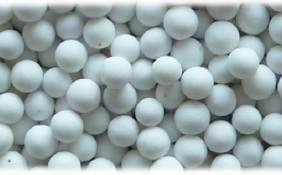
Ceramic is a kind of spherical shots identified by a letter B followed by some numbers; the higher the number the smaller the shots.
Ceramic is hard yet very fragile, so this shots can provide good cleaning performances without spoiling the parts.
Consistency in shape and dimensions give high consistency during process, a benefit you pay for, since it isn't cheap.
To protect ceramic media during the process CM machine has a special kit to save media from being accidentally broken while flowing inside of the machine. It is always possible with a little spending to install this kit and convert an equipment made to run with steel to run with ceramic.
Ceramic waste is NOT reacting to fire, sparks, as metal dust usually is, so helps a lot to make the environment where it is performed safer compared with other kinds of media.
Beyond the few introduced here, there are countless others — different materials, chemistries and manufacturing methods — too many to list.
The Engineering Behind the Choice: Our Consultancy Approach
Choosing a blasting media based solely on price-per-pound is the most common hidden drain on manufacturing margins. At CMblasterUS, we analyze the process through three technical lenses to ensure your choice is a strategic asset, not just a consumable:
-
Kinetic Customization: We balance turbine velocity with the Specific Gravity of the media. Whether you need high-momentum steel for deep descaling or low-density aluminum/ceramics for delicate, thin-walled geometries, we engineer the impact energy to protect your part's structural integrity.
-
The Hardness Differential: We evaluate the hardness ratio between the media and your specific workpiece. Our goal is to find the "Economic Sweet Spot"—the exact point where you achieve the required surface morphology (Ra/Rz) without causing unnecessary wear on your machine’s internal components.
-
Metallurgical & Chemical Integrity: We prevent "invisible" failures. By selecting chemically inert media, we eliminate risks like ferrous contamination on stainless steel or surface energy imbalances that can lead to catastrophic delamination in subsequent coating or bonding processes.
Don’t just buy a commodity. Optimize your process.
The right media choice is a calculation of Total Cost of Ownership (TCO), factoring in purchase price, cycle times, disposal costs, and machine maintenance.
Are you looking to reduce your cost-per-part or solve a complex surface challenge? Are you struggling to source a specific media?
Blasting & peening media — standards reference.
Specifications are coming from SAE (Society of Automotive Engineers), AMS (Aerospace Material Specifications - a SAE division), ISO (International Organization for Standardization), JIS (Japanese Industrial Standards), GB ( Guóbiāo - Chinese Standards), GOST (Gosudarstvenny standart - National Standard) and sold by the organizations, links and brief descriptions are in the following.
SAE — shot & grit.
- SAE J444 — Cast Shot and Grit Size Specifications for Peening and Cleaning.
Last revised June 2023. Norm is about the size of the media, designated S for shot and G for grit; the following numbers are related to the nominal sieve opening, measured in 10⁻⁴ inches. SAE J444
- SAE J827 — High-Carbon Cast-Steel Shot.
Last revised October 2019. Norm is about the feature of the material in terms of chemical composition, microstructure, hardness - this goes in the range 40/51 HRC for 90% of the shots. So while the SAE J444 says about shape and size of the media, SAEJ827 is about the material itself if it is made by high-carbon cast steel shots. SAE J827
- SAE J2175 — Specifications for Low Carbon Cast Steel Shot.
Last revised July 2021. Norm is about the feature of the material in terms of chemical composition, microstructure, hardness - this goes in the range 40 - 51 HRC for 90% of the shots.So while the SAE J444 says about shape and size of the media, SAE J2175 is about the material itself if it is made by low-carbon cast steel shots. SAE J2175
- SAE J445 — Metallic Shot and Grit Mechanical Testing.
Last revised May 2022. This one is different: it does not set requirements, it describes how you test metallic shot and grit in the lab — hardness, density, defective particles, durability. So J444 tells you the size, J827/J2175 tell you the material, and J445 tells you how to check it. SAE J445
- SAE J1173 — Size Classification and Characteristics of Glass Beads for Peening.
Last revised May 2019.Covers glass beads (glass shot) for peening. Unlike steel — where size and material are in separate standards — here one standard does both: size is given as GB + a number (the nominal bead diameter in hundredths of a millimetre), and the material must be high-quality soda-lime glass, round, free-flowing and free of harmful impurities. Field note: glass beads are rarely run on wheel (turbine) machines. Their low density makes them hard to accelerate through the wheel and prone to shatter — they work far better with air-pressure blasting. SAE J1173
- SAE J1830 — Size Classification and Characteristics of Ceramic Shot for Peening.
Last revised October 2023. Like glass, one standard covers everything for ceramic shot: size (designated Z + a number, e.g. Z425) plus the material characteristics — chemistry, microstructure, density, hardness, shape and appearance. The media is zirconium-oxide-based ceramic. Field note: being zirconia-based, spent ceramic media carries natural radioactivity (NORM) — which is why it is handled as special waste at disposal, unlike steel which goes back as scrap. SAE J1830
- SAE AMS2431E — Peening Media, General Requirements.
Last revised April 2023. The aerospace media standard. It sets the general requirements for shot peening media, then splits into detail sub-specs, one per material — you cite AMS2431 plus the slash number for the media you use:
-
/1 — Cast Steel Shot, Regular Hardness (45–52 HRC)
-
/2 — Cast Steel Shot, High Hardness (55–62 HRC)
-
/3 — Conditioned Carbon Steel Cut Wire Shot, Regular Hardness
-
/4 — Conditioned Stainless Steel Cut Wire Shot
-
/5 — Case-Hardened Steel Peening Balls
-
/6 — Glass Shot
-
/7 — Ceramic Shot (designation AZB — aerospace twin of SAE J1830)
-
/8 — Conditioned Carbon Steel Cut Wire Shot, High Hardness
Field note: AMS2431 is the aerospace counterpart of the SAE J media standards — same materials, tighter control. A general-industry job quotes the J numbers; an aerospace job quotes AMS2431/x. AMS2431E
- ISO 11124 — Metallic blast-cleaning abrasives — specifications.
Last revised 2018. The full title is "Preparation of steel substrates before application of paints and related products — Specifications for metallic blast-cleaning abrasives". Six parts, each a material:
-
Part 1 — General introduction and classification
-
Part 2 — Chilled-iron grit (→ /66705)
-
Part 3 — High-carbon cast-steel shot and grit (→ /66706)
-
Part 4 — Low-carbon cast-steel shot (→ /66707)
-
Part 5 — Cut steel wire
-
Part 6 — (metallic, closing part of the series)
Designation: "Abrasive ISO 11124" + a code for material (e.g. M/HCS high-carbon, M/LCS low-carbon), + shape (S/G), + a 3-digit grade = nominal particle size in mm × 100. ISO 11124
- ISO 11125 — Metallic blast-cleaning abrasives — test methods.
Last revised 2018The test-method companion to 11124: sampling, particle size, hardness (Vickers), apparent density, defective particles/microstructure, foreign matter, moisture. ISO 11125
- JIS G 5903:2018 — Cast Iron and Steel Shot and Grit.
Last revised March 2018. Japan's core standard for metallic media (steel and cast-iron shot and grit) for blast cleaning, shot peening, surface prep and etching. Grade number = mean diameter in mm × 100 (1 mm = No. 100), the same logic as SAE J444 — Japanese makers list it as the direct equivalent. Absorbed the old grain-size test standard JIS G 5904 in this revision. Counterpart of SAE J444 + J827, ISO 11124. JIS G 5903
- JIS G 0951:2020 — Shot Media of Circulation Type Shot Peening for Steel Structure.
Last revised 2020. More specific: shot for recirculating (wheel/air-recovery) peening systems, aimed at fatigue-strength improvement of welds and heat-affected zones in steel structures. Sets three shot types (cast steel, conditioned cut wire CCW, stainless cut wire SCCW), hardness ≥ 600 HV, apparent density ≥ 7.0 g/cm³, size grades No. 30 to No. 120. Directly relevant to wheel-blast operations with media recovery. JIS G 0951
- GB/T 18838 — Preparation of steel substrates before application of paints — Specifications for metallic blast-cleaning abrasives.
China's standard for metallic media, structured in parts and issued as an identical adoption of ISO 11124: Part 2 chilled-iron grit, Part 3 (2008) high-carbon cast-steel shot and grit, Part 4 (2008) low-carbon cast-steel shot, Part 5 (2015) cut steel wire. Chinese test labs list GB/T 18838.3 directly alongside SAE J444, AMS 2431 and ISO 11124-3 as equivalents. Direct counterpart of ISO 11124 (and, through it, SAE J827/J2175). GB/T 18838
- GOST 11964-81 — Cast Iron and Steel Technical Shot. General Specifications.
Last revised 1981 (amendment N.1, 1989; 2005 reprint), still in force. The core standard for metallic media (steel and cast-iron) in Russia and the CIS, covering cast, crushed and chopped shot. Sets density, hardness and structure — minimum density 7200 kg/m³ for all types except chopped. Russian bag markings you'll see: ДСЛ cast steel shot, ДСК crushed steel grit, ДЧЛ cast iron shot, ДЧК crushed iron grit, ДСЛУ/ДЧЛУ heat-treated "improved" grades. Rough counterpart of SAE J827/J2175 and ISO 11124. GOST 11964-81